
No Turn On Red
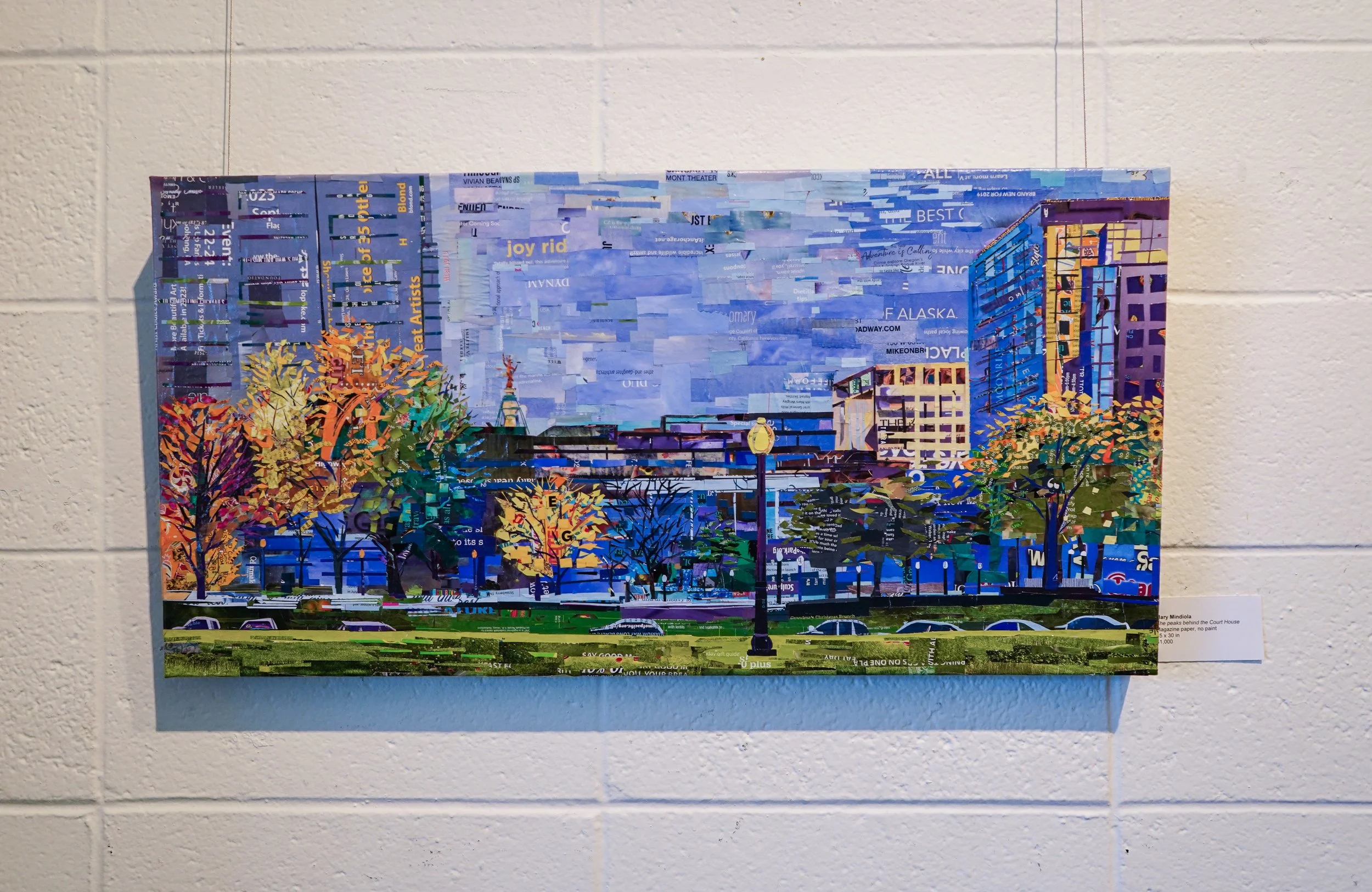
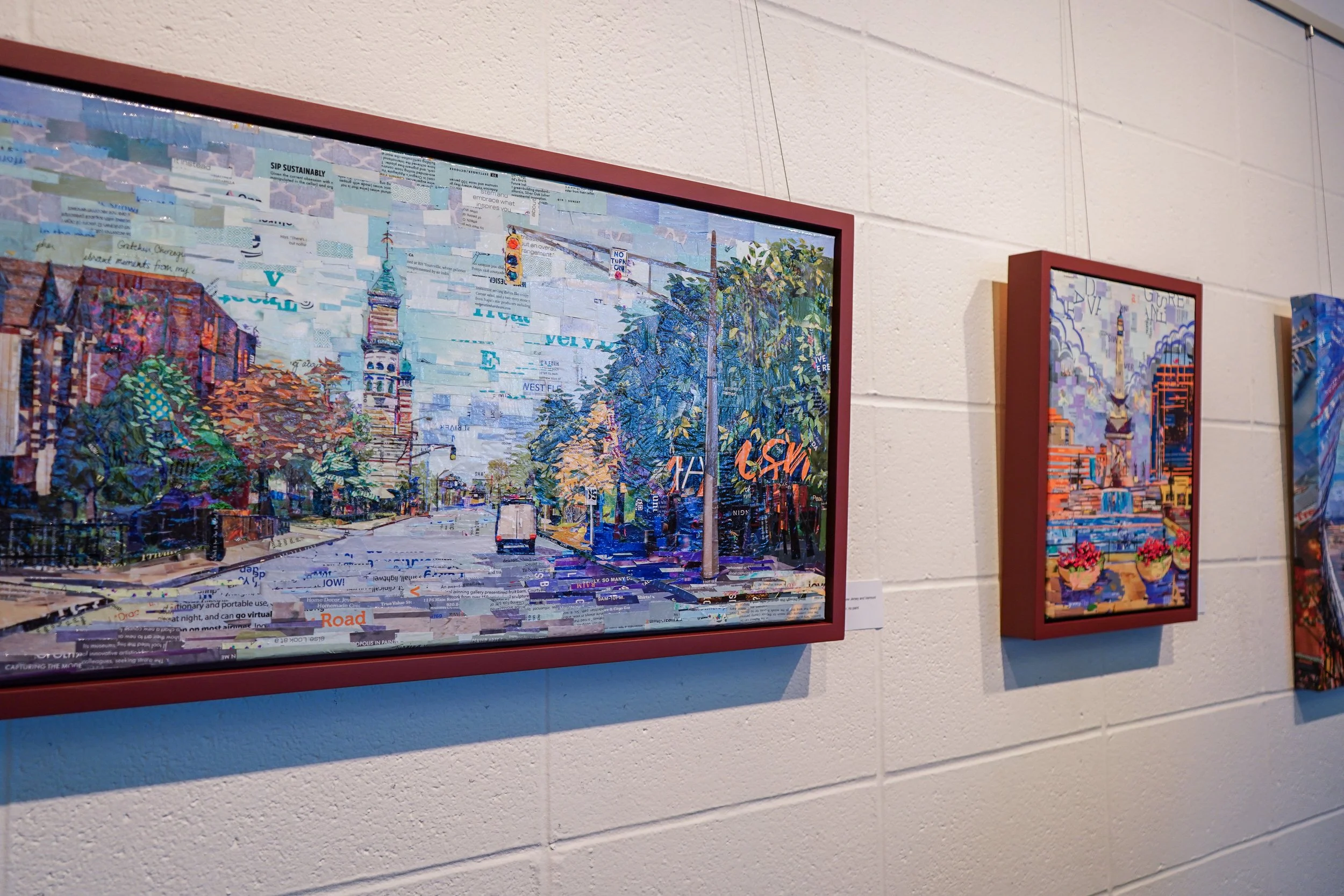
Venezuelan artist Mary Mindiola first started collaging magazine pages after a trip left her thinking about how contaminated our planet's water is. She dedicated herself to no longer using paint in her artwork to limit her contribution to plastic pollution. Since then, she's focused on using what is already available to her as her medium, like prints, magazines, and junk mail. Her big question then was, "What world are we leaving our descendants?" and she continues to ask that in her exhibition, No Turn On Red.
On the surface, No Turn On Red is about the sign often spotted on our Indianapolis streets and in the scenes of this show. But on a deeper level, it participates in a conversation about humanity and responsibility. As many have experienced, Mindiola was crossing the street on her bike when what could have been a fatal accident occurred—a car turning on red almost ran her over. Why was the driver in such a hurry? While there's some room to give the benefit of the doubt, Mary shared that the driver's entitlement to turn the corner quickly, despite her presence on the street, showed their lack of concern for others around them. "Laws are there to protect all of us," she said. "Otherwise, why do we have them at all?"
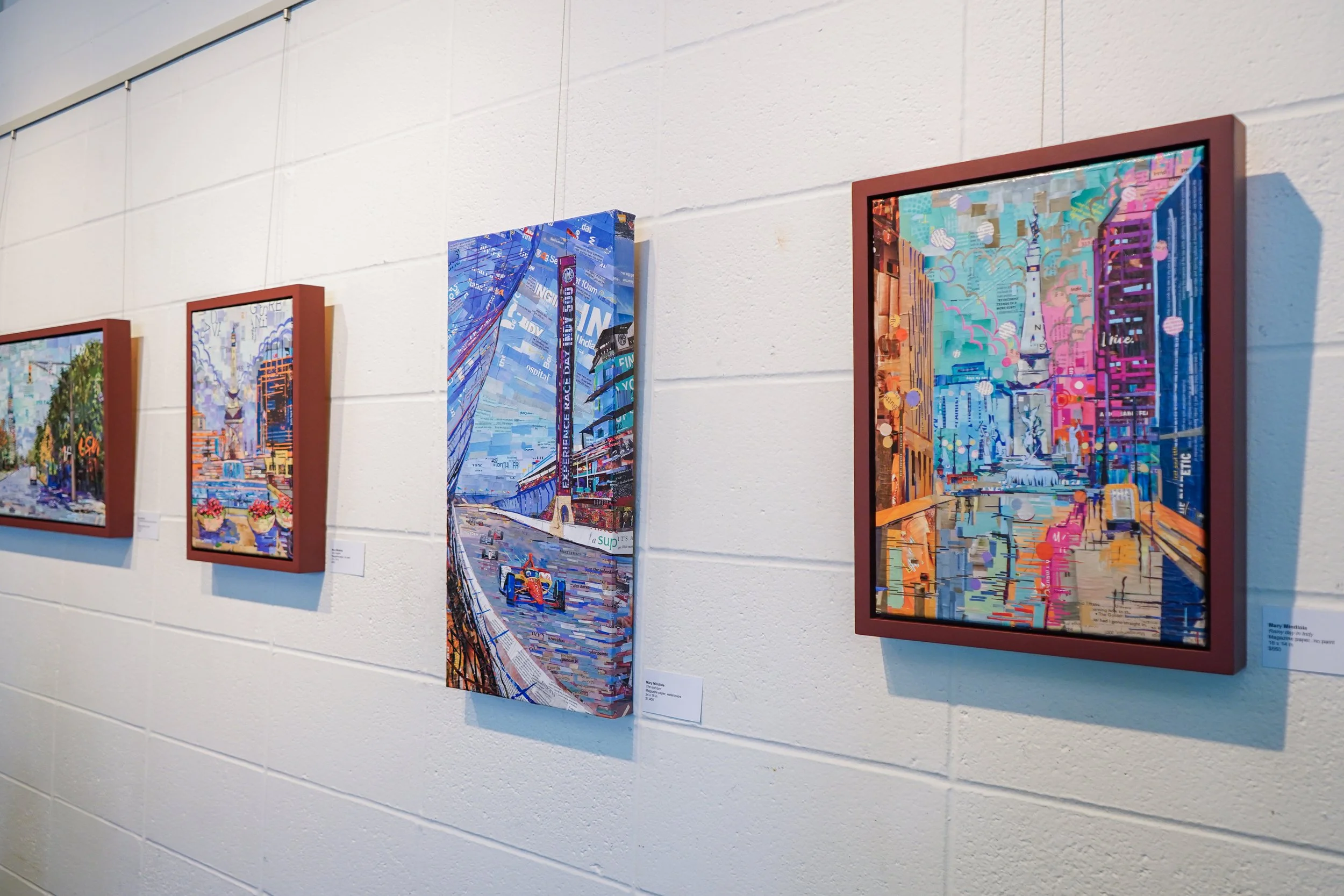
Some may see the signs as bureaucratic overreach, while others see them as safety measures. The tension that builds from this conflict can be reminiscent of our current political climate in the United States. Mindiola shared, "The title [No Turn On Red] reflects my frustration with the current administration and my need to speak up. … The laws apply to everyone. If your personal need ignores someone else's safety, then you are imposing your[self] over others, not your freedom" (emphasis mine).
Taking a moment to pause, whether at a red light waiting for your turn to go or in front of a piece within Mindiola's show, offers space for a new perspective or two to come into view. A street corner can be beautiful for its aesthetic, along with the chance it brings to "think about our political system, the importance of laws—[even] our traffic signs—and why they are there."
Mindiola hopes her lens of Indianapolis in No Turn On Red brings new opportunities for reflection to the viewers. Take time to notice the physical street intersections we frequent, as well as the metaphorical intersections we cross with other people every day. I encourage you to stop and reflect on the more overtly political pieces, like One Way Only, and those that might take you a minute to connect with; see what hidden messages Mindiola has woven into her depictions of our city.