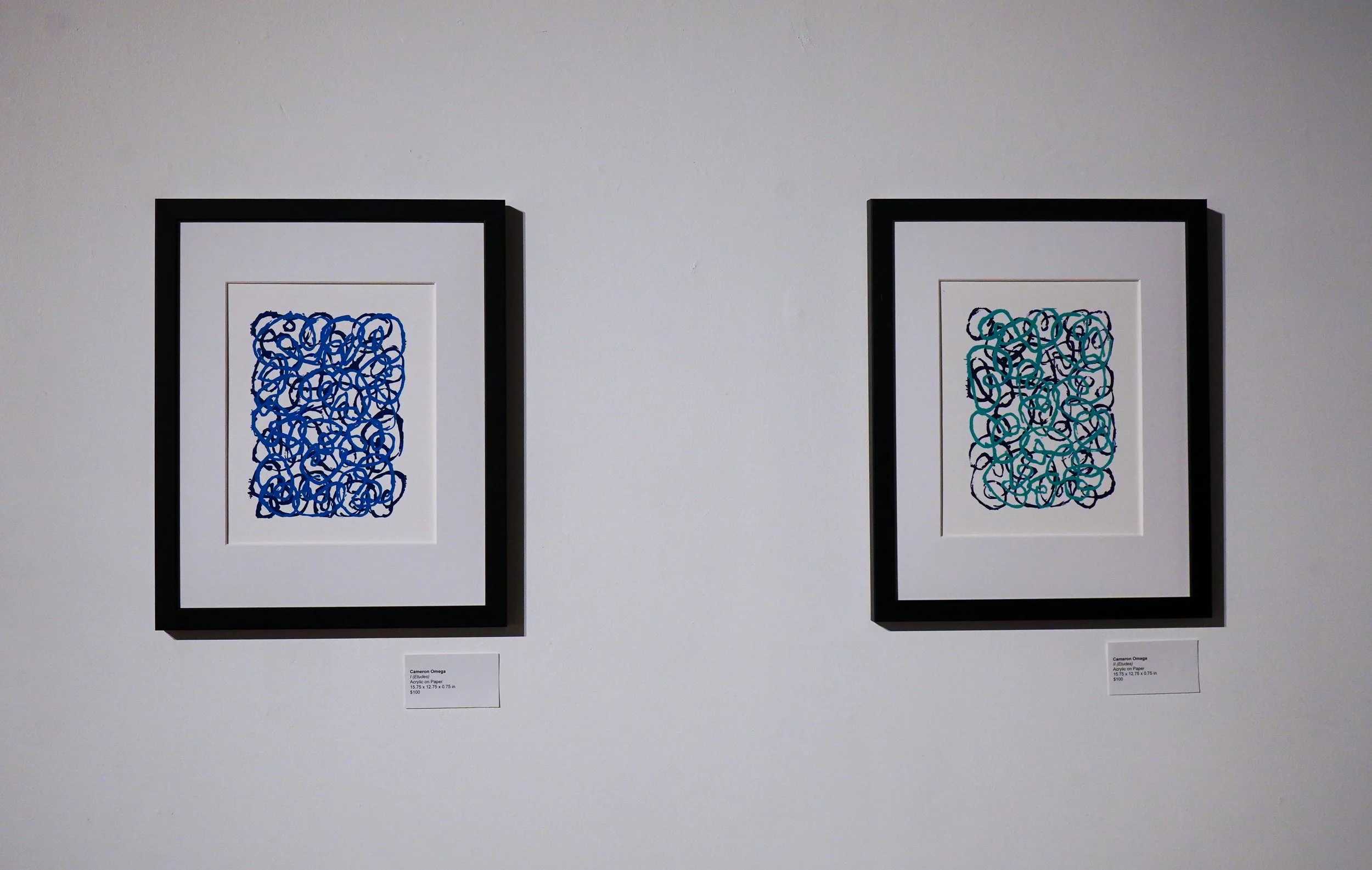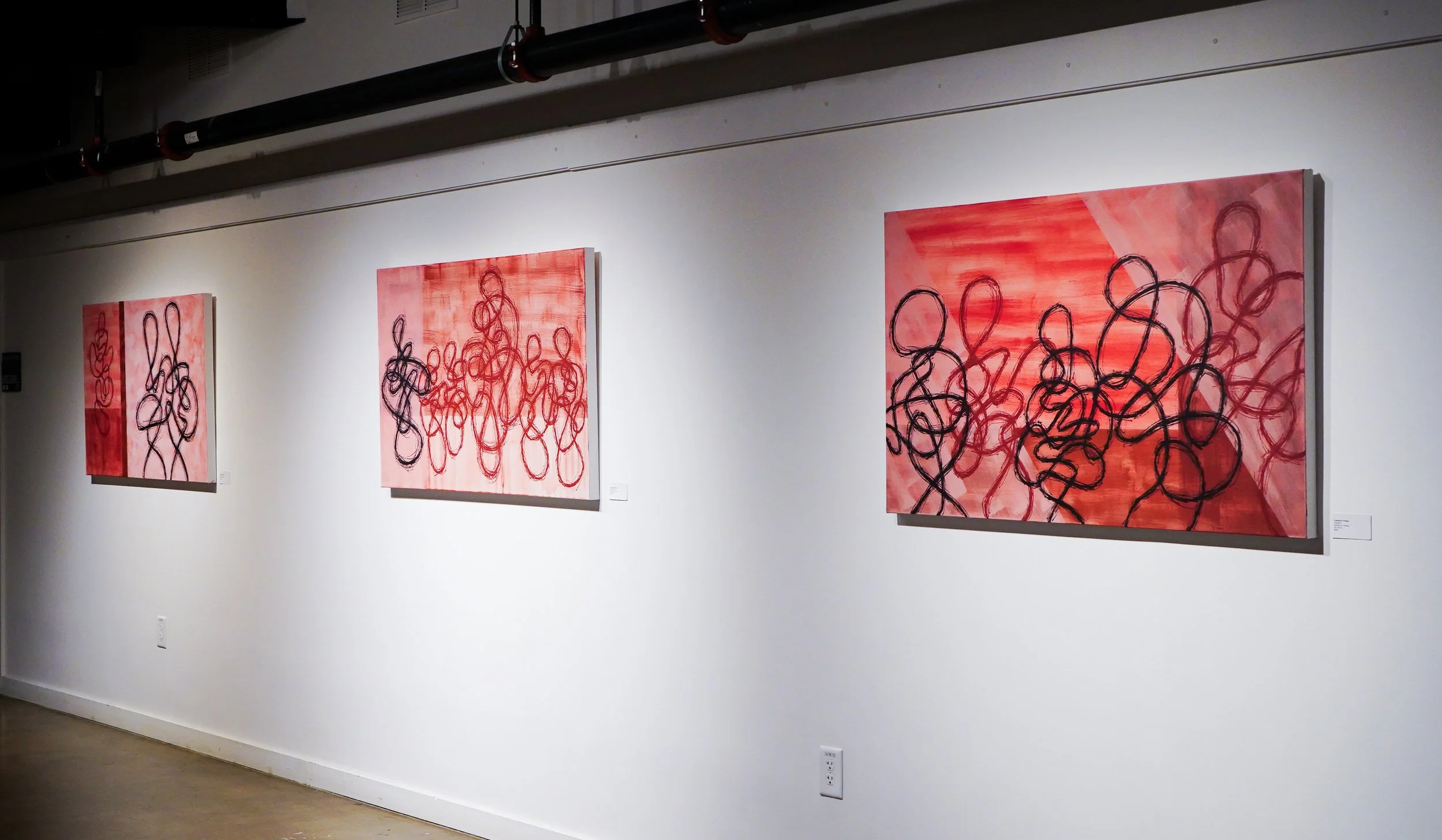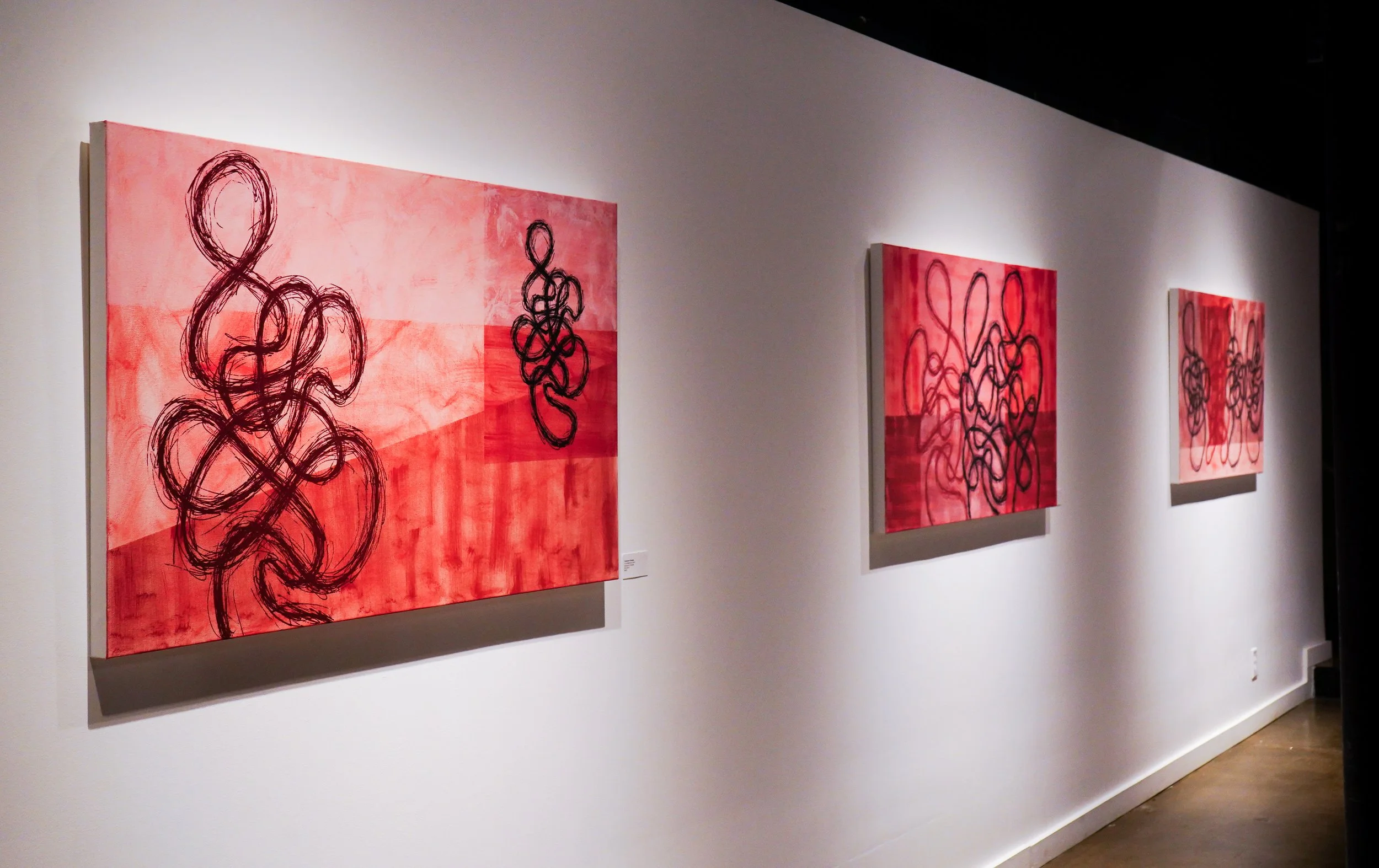
In his show, Q. Is this all there is? A. Probably, painter Cameron Omega emphasizes the fact that two things can be true at the same time, however difficult this can be to believe at times. Drawing inspiration from the compositions of Renaissance masters, Omega was also inspired by the deep reds in the contemporary artist Mark Tansey's painting Triumph Over Mastery II. While these two sources are evident in each piece in this show, Omega also uses his unique use of line and composition to make these paintings his own.
Each painting is full of different shades of red, with dark red and black lines forming shapes over them. The composition of each line emulates a figure, thus evoking the various dramatic poses found in Renaissance paintings. The way these lines curve and loop is mesmerizing and perfectly utilizes both the positive and negative space of each piece. This juxtaposed with the different shades of red creates a collection of work that is deeply contemplative and personal.
The linework in these paintings points not only to the dramatic poses of Renaissance figure paintings, but also to the way our lives intersect with those of others. In his piece June, Hot October, Omega depicts an experience sitting with a family member during their time in the hospital. The composition and the way the lines intersect suggest a close relationship between the two people, while still using abstraction to underscore the theme of the entire show: that two things can be true at the same time. We can experience both joy and sorrow simultaneously, and a piece can be both representational and abstract.
When viewing this show, take time to trace each line as it flows over each piece, emulating figures in different dramatic poses. Think about the different things that are true at the same time in each of our own lives, and how having these nuances in common is part of what makes us all human.