
Lake Station Addendum
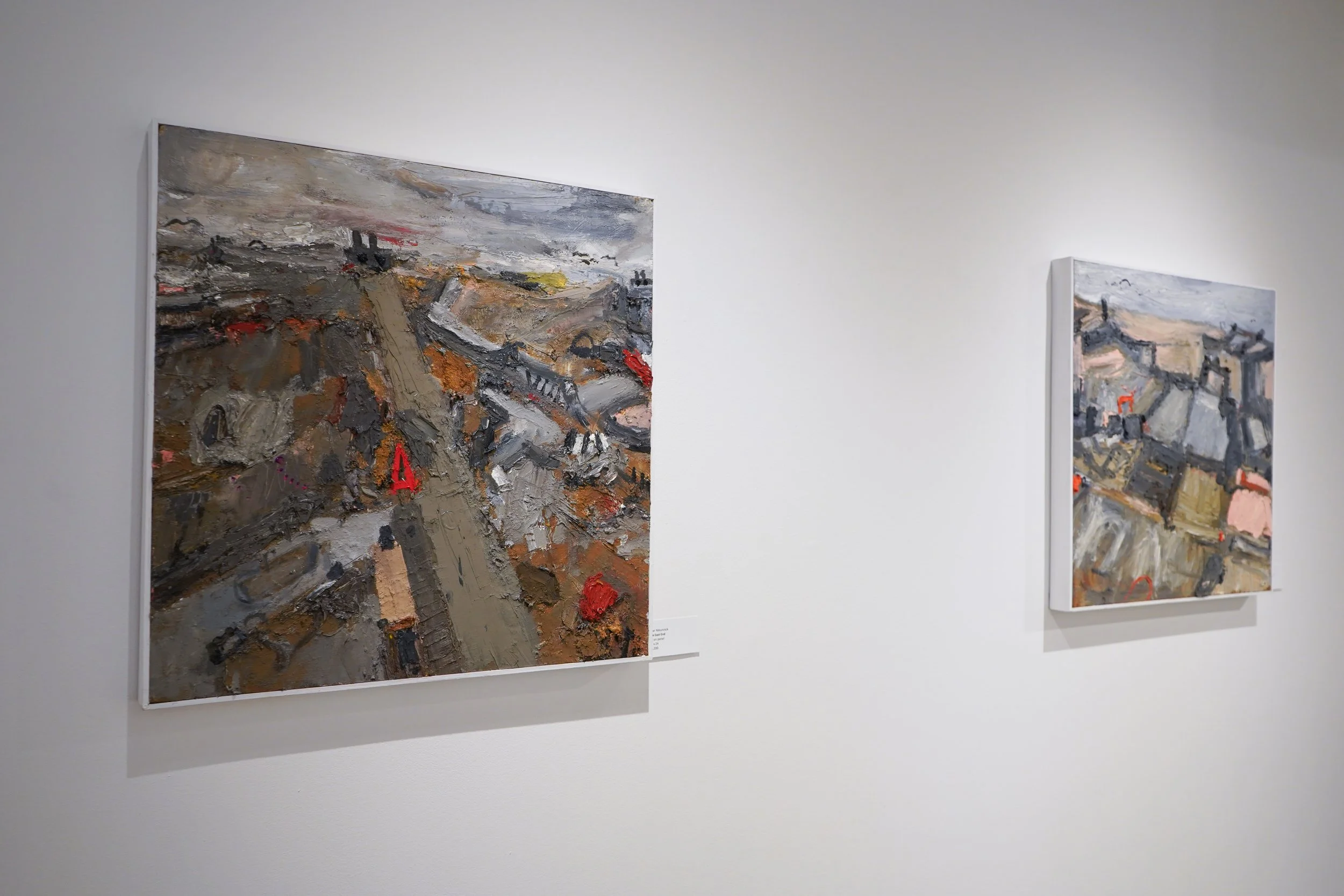
Tyler Meuninck's latest show, Lake Station Addendum, is a deeply personal and atmospheric exploration of the South Shore. Like the region itself, his work is filled with history, memory, and grit.
While Meuninck's primary medium is oil paint, he also incorporated colored pencils, paint sticks on butcher paper, paper cut-outs, and pastels into this show. Still, oil paint is his favorite. There's something unnameable…about oils, though, that I like. Its viscosity when I use it." He's especially drawn to the uncertainty oil paint brings and its "unpredictable drying possibilities." For Meuninck, unpredictability is an opportunity for potential.
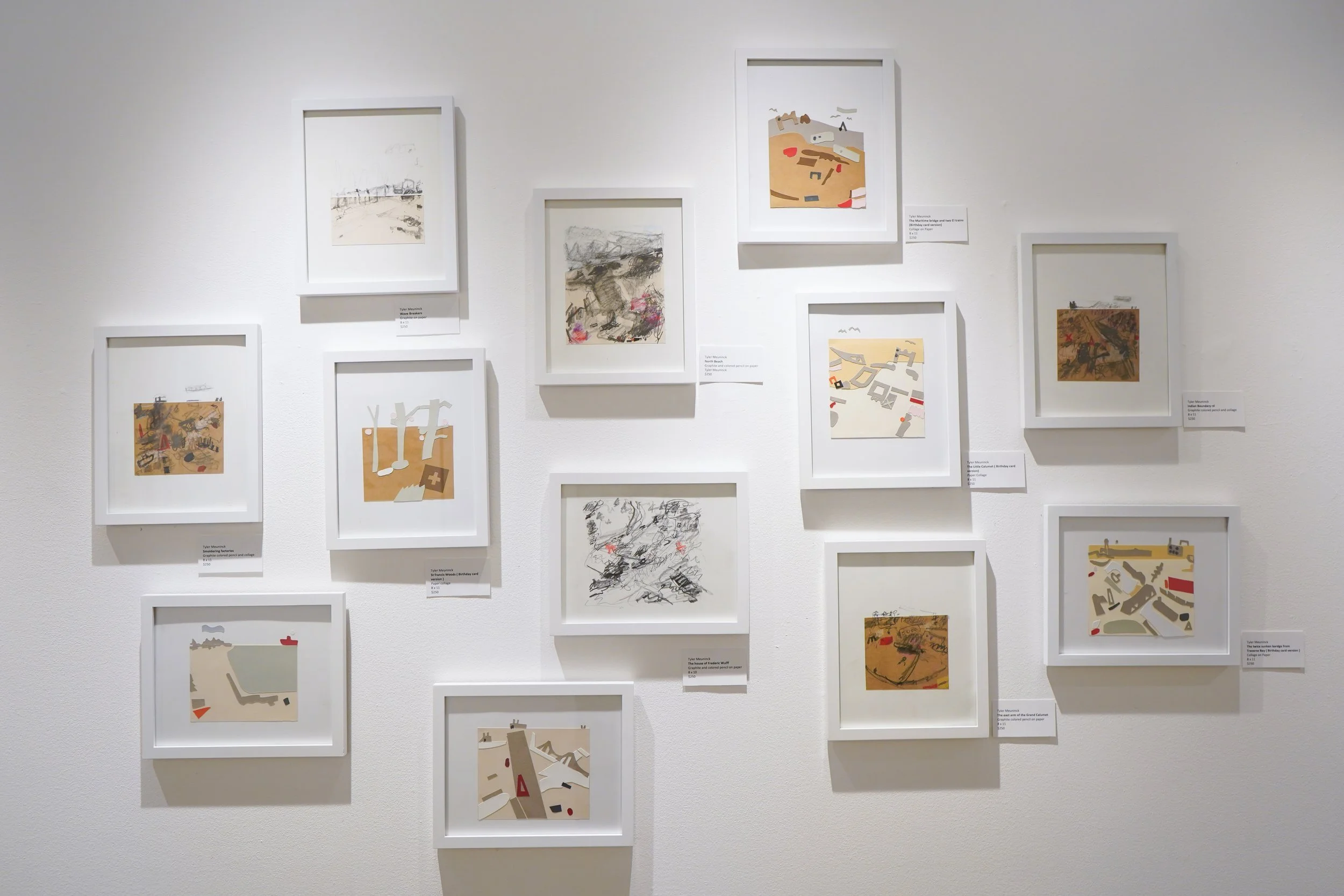
This tactile uncertainty echoes the complexity of the landscapes he portrays: Northwest Indiana, Lake Michigan and South Chicago. He knows these places well. He recalls train commutes from Milwaukee to South Bend and trips with his father to Calumet City. "My father knew all sorts of things," Meuninck says, "everything from Civil Rights activism, the rise and fall of the steel industry, gang legends from the prohibition, and stories of my grandparents' Friday night excursions to 'Cal City." These stories, rooted in family and place, left a memorable impression.
Light also plays a central role in Meuninck's show—visually and metaphorically. “There's a large degree of invention and abstraction in the work," he explains. “I've tried to capture a certain light of the place and the environment." Sometimes that light may be ironic, depicting South Chicago as soft and airy. Other times, it's a heavy, Midwestern gloom of Metra trains under the sky. Light becomes more than brightness. It reframes spaces and challenges familiar perceptions.
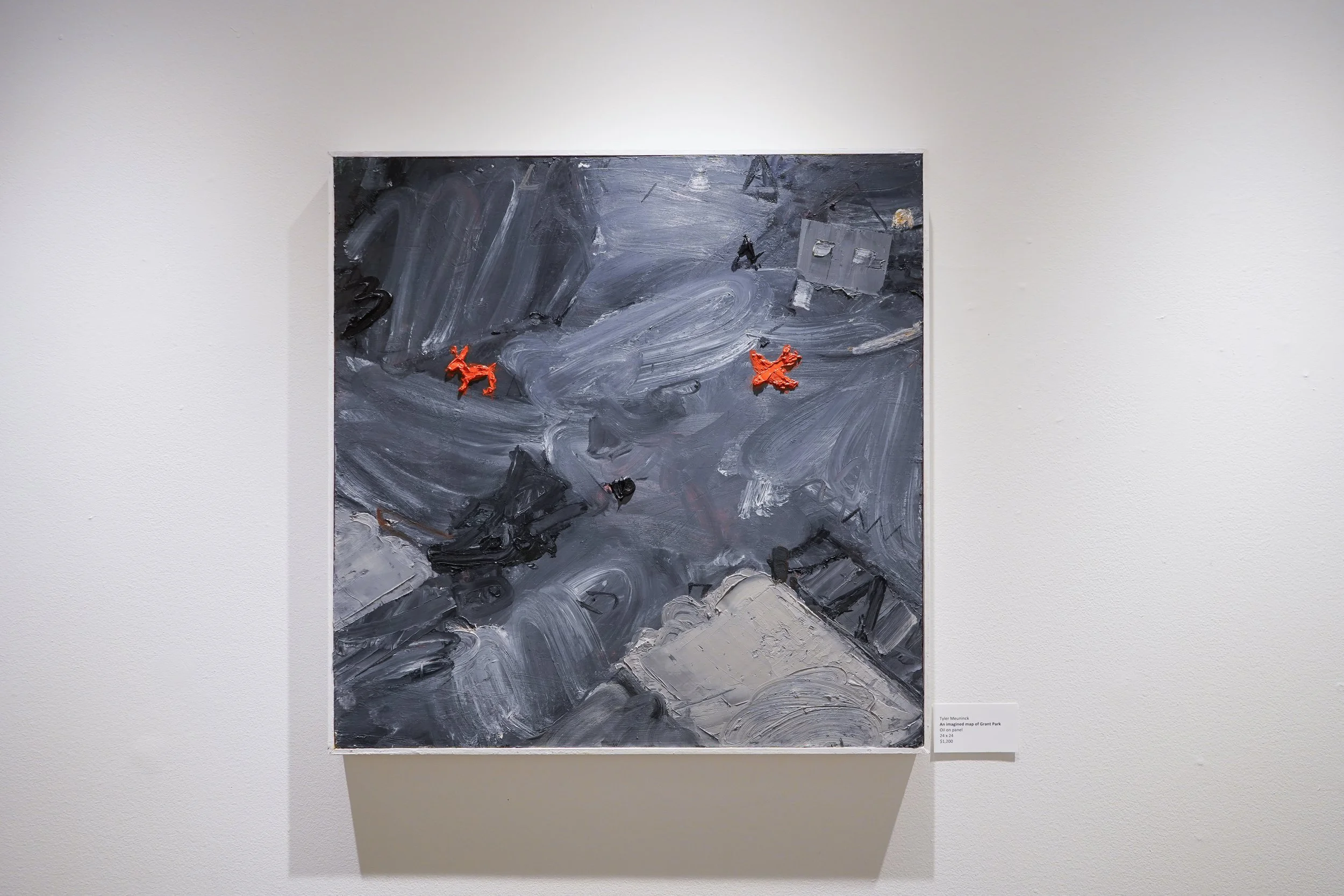
But beyond technique and subject matter, his passion for creating is most important to mention. "It's best to use my good energy for creating," he says. "I still make art as more or less a labor of love than anything else. That's been a lifelong commitment all the way around." I invite you to step into the world as Tyler Meuninck sees it—layered with memory, shaped by light, and rooted in love for place and process.