Past Tense
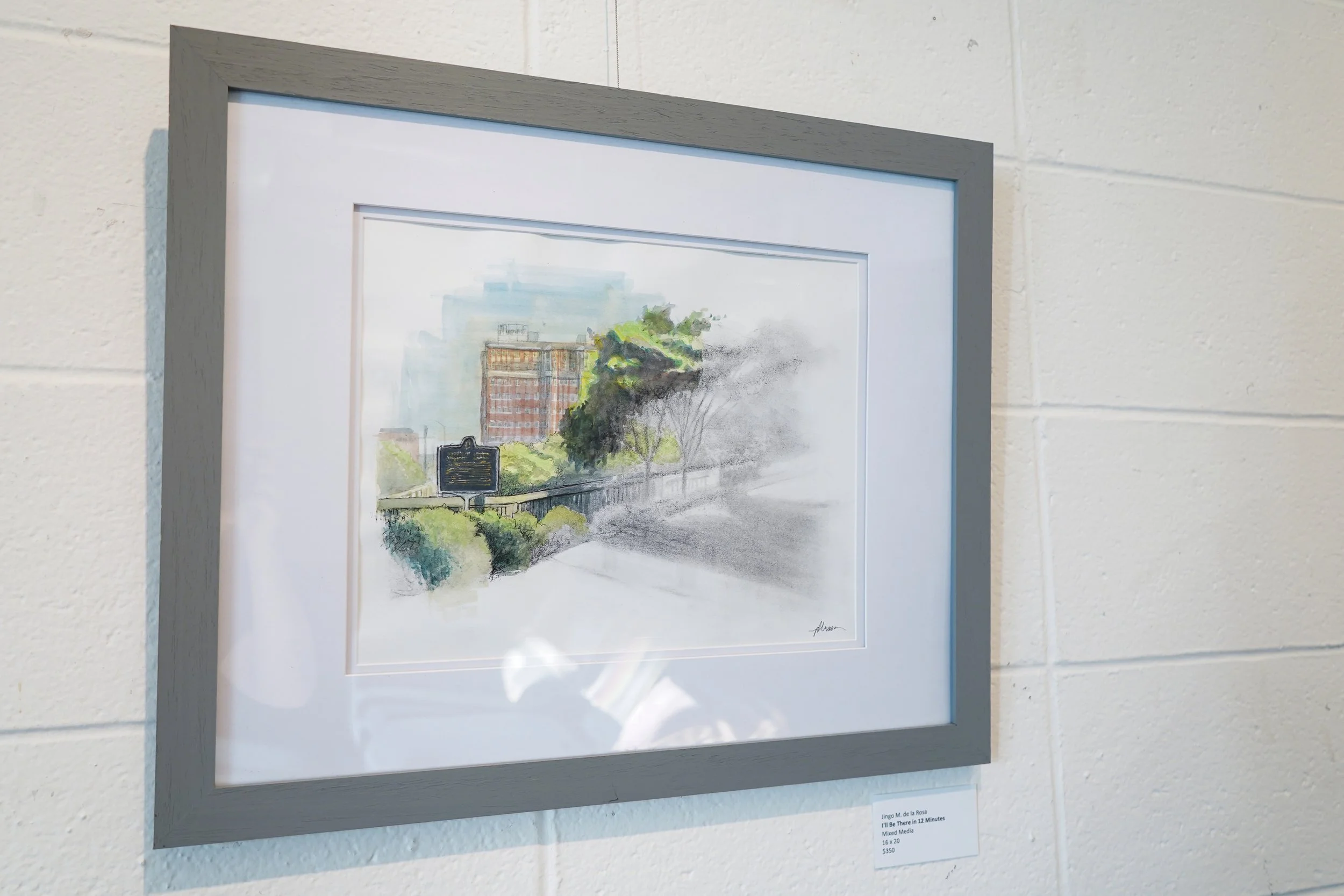
"I lost my Mom unexpectedly last year, and that was the catalyst for the show," artist Jingo M. de la Rosa shared with me. "I had a wonderful relationship with her, and it was a shock to my system when she passed away. She lived in Indianapolis for the last 15 years of her life, and I was lucky enough to share this place with her." De la Rosa's exhibition, Past Tense, titled in reference to how he must now speak of his late mom, is about pain and hope, the now and not quite yet, and the tension between those things.
This tension demands to be felt in the show in many ways, especially in de la Rosa's color choice. But how to do this didn't come to him right away, despite it being an important element in telling his story; it transitioned over time.
De la Rosa originally intended Past Tense to be a completely grayscale collection; however, he later felt that infusing some color would best communicate the mood of his show. "Having both gives a completely different message," he said. "Memory can be both vivid and unclear … we can choose to remember things in a certain light."
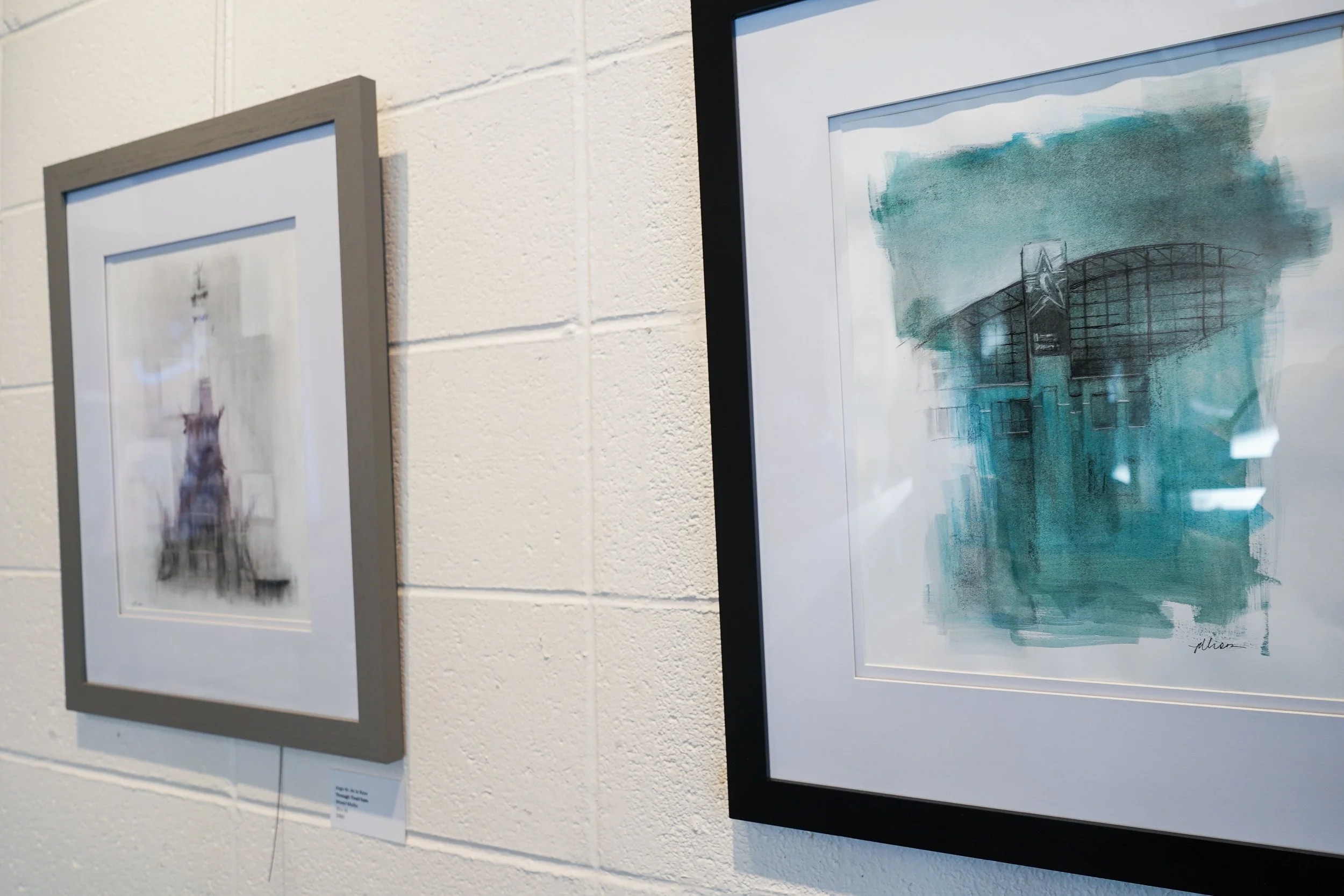
The importance of depicting this tension is clear. "Loss is a universal experience," de la Rosa proclaimed. The circumstances may be different, but we all go through it, and it defines us and unites us. Through understanding this key detail of humanity, his longing for the show evolved even further. He no longer wanted to show places that reminded him of his mom; he wanted to represent something deeper: how memories are fragmented and how a place evolves after loss.
De la Rosa elaborated on this. He said, "I wanted to honor those who are living a new reality after loss, particularly those who live here in Indy … we are not alone in this experience." With the show's setting in Indianapolis, you'll likely recognize some places. Gainbridge Fieldhouse, the Soldiers & Sailors Monument, and a little ice cream place in the heart of Greenwood, Mrs. Curl, are just a few featured spots. Mrs. Curl is the focal point of de la Rosa's current favorite piece in his show, The Place We Used to Love. Not only was the place beloved by him and his mom, but the process of bringing it to life on paper was also meditative for him. He told me about revisiting the beautiful memories he shared with her. "For a brief moment, I felt deeply connected with her despite her absence."
De La Rosa's hope for Past Tense is that the attendees won't see an artist "paralyzed by his loss, but rather someone who is transformed by it." He is committed to continuing to create beauty as he navigates his grief. "Beauty creates hope, and hope brings new life even in death."