
Apokalupto
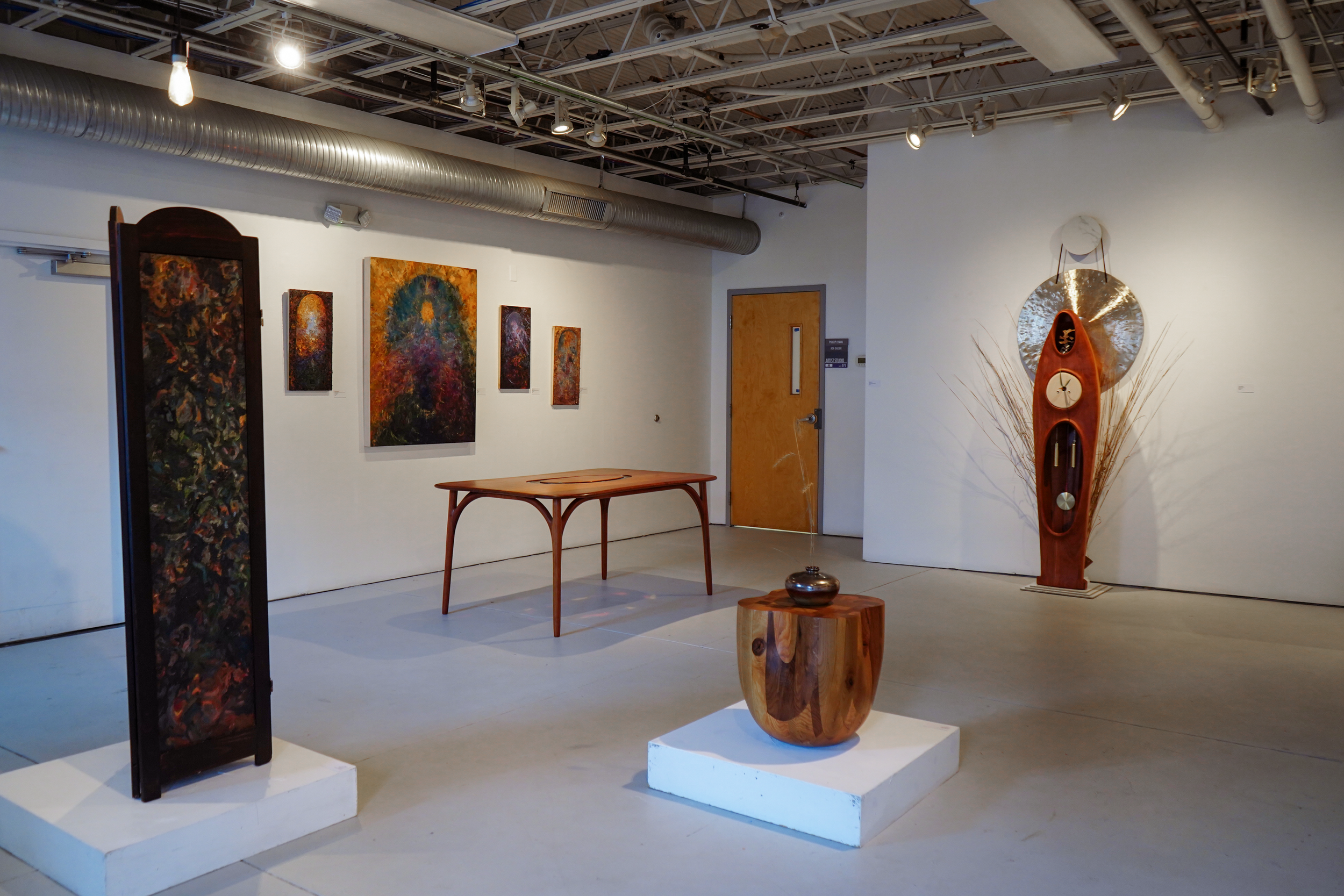
Have you ever wondered what a dialogue between wooden furniture and oil paintings on decomposition, surrealism, and renewal would look like? In their collaborative show, titled Apokalupto, Morgan Binkerd and Conner Knoll seek to answer that question. They explain that the title they chose, the Greek word "apo+kalupto," means "revelation" or "unveiling" and can be translated as "to disclose" or "to uncover." The juxtaposition of Binkerd's textured paintings with Knoll's sleek wooden sculptures invites the viewer to participate in the conversation and contemplate life's cyclical nature.
Binkerd's main focus in her work is to process life and death through the very physical act of painting. She patiently and carefully builds her pieces with layer upon layer of oil paint, creating something new even as it reflects on time and how things change through the way that the paint changes as it sits on the canvas. The bumps and ridges imitate the forest floor, where leaves and brush have decayed and come together to form humus, which will then support new life. Her paintings can feel abstract because of their textural, tactile nature, but the works in this show are also representational. The color palettes are muted but go together so seamlessly, and each piece feels like a portal to another world or another time, thanks to the arches many of the paintings depict. They are thoughtful and have a spiritual quality about them as well.
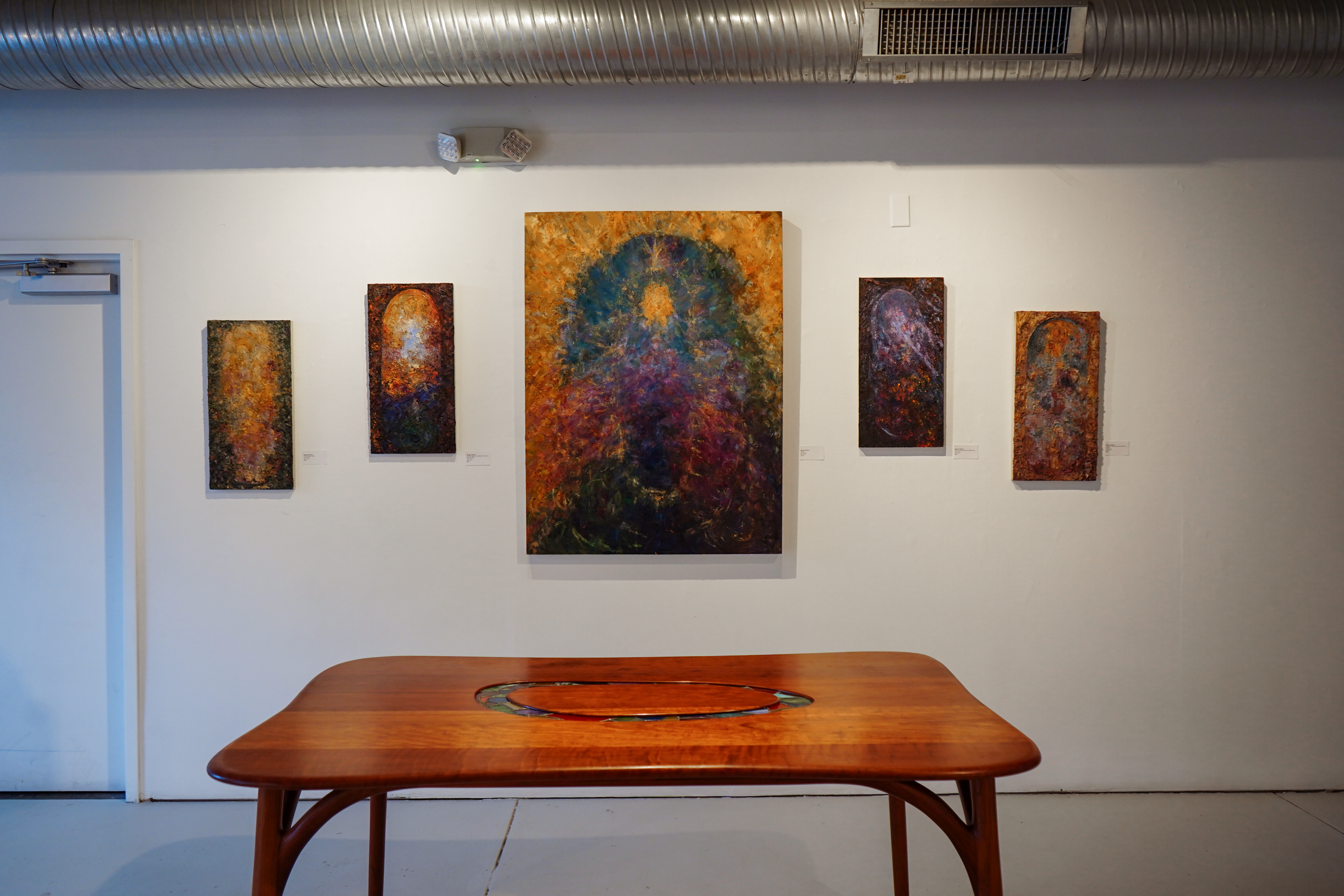
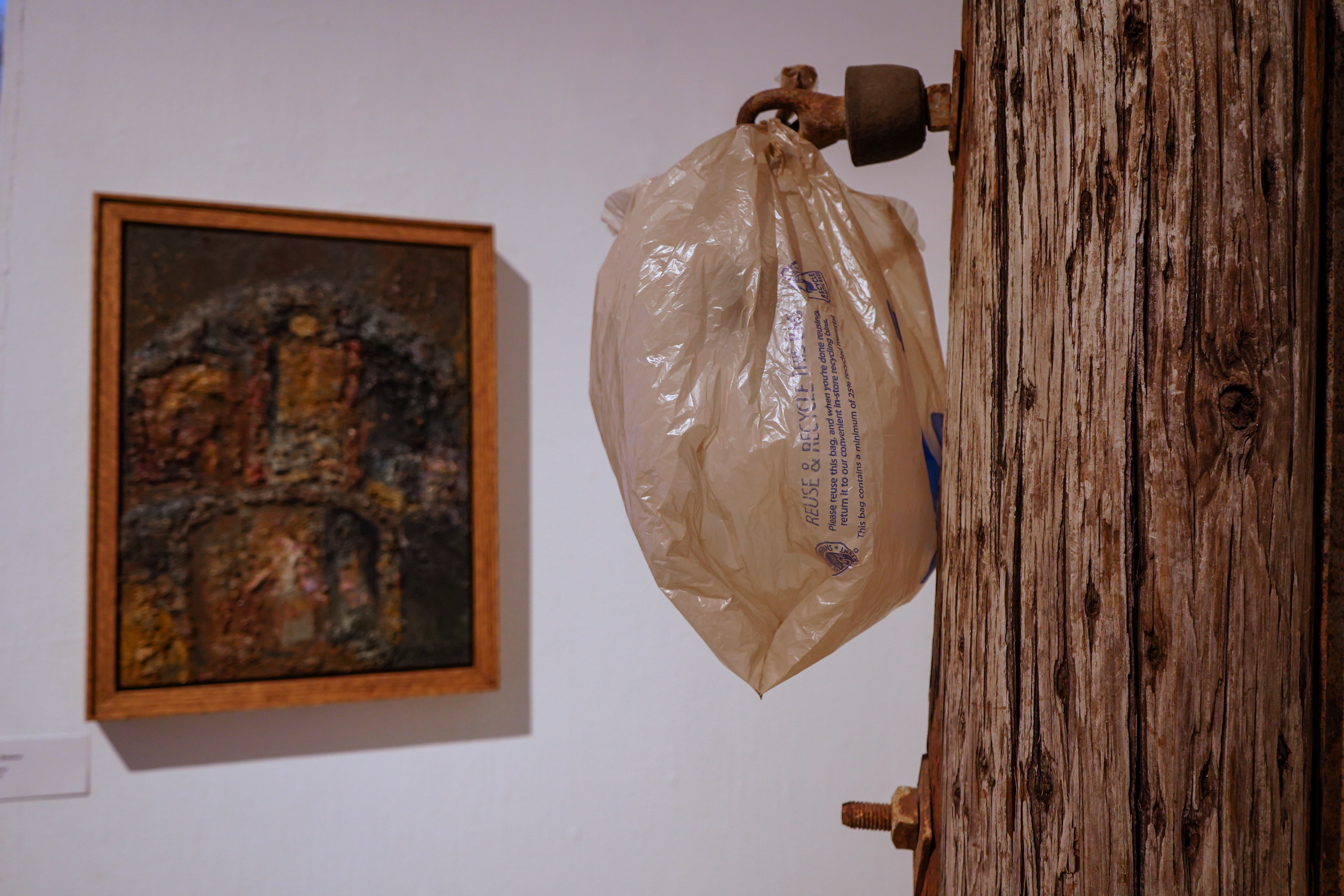
Knoll's sculptures are graceful in form and have a Surrealist quality. The lines and shapes are smooth, with slender table legs and curved edges. They are reminiscent of a piece viewers may have seen before, but certain elements make them feel decidedly unique. In Knoll's piece, Little Fish, it is clear that it is an expertly crafted table. But a second glance emphasizes how it is slightly different in the details of the stained glass laid into the center and the delicately curved legs. Knoll has elevated the table, one that usually holds or supports other items, and made it an art piece all on its own. Another example of Knoll's work is his Fallen Leaf Arrangement series, where he has taken what he calls "fallen plant matter" and created wire mechanisms to display each leaf. These pieces ask us to think about what makes art beautiful: is it the ability to be useful, or to last a long time? Knoll's practice makes us question the life cycle of the wood he uses for his sculptures, including the leaves that fall from the trees.
Apokalupto is a somber show that balances the surreal with the beautiful, capturing the absurdity of loss and new life. These two artists' work offers different ways to navigate and process our emotions around topics such as the cycles of life and aging, inviting viewers to step into the conversation.