
Urushi Odyssey
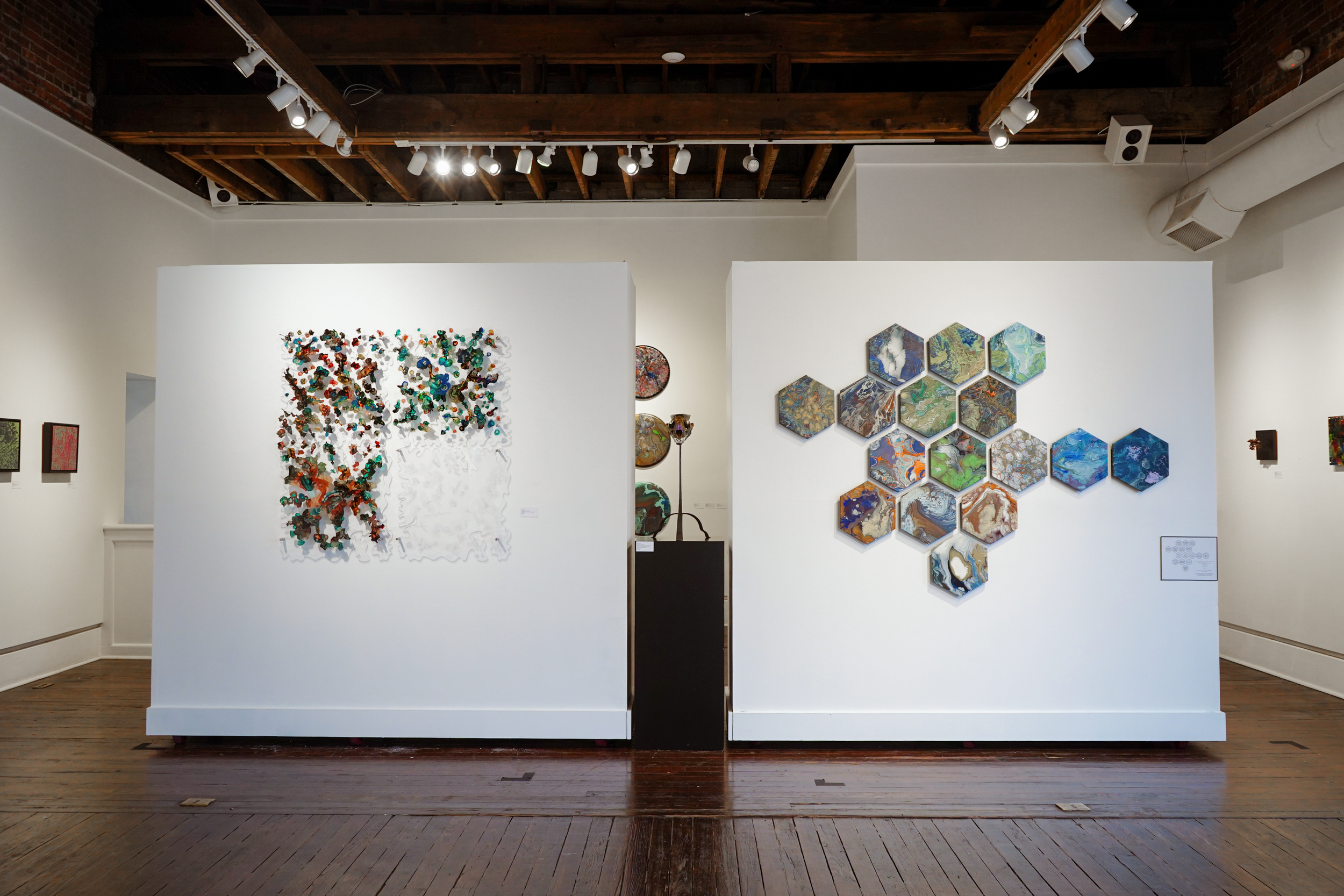
World-renowned artist Nhat Tran sees each show as an opportunity for discovery, and the aptly titled Urushi Odyssey is no exception. When looking at her expansive oeuvre, Tran emphasizes that each show looks different (different mediums, materials, etc.) because she sees each as an opportunity to make discoveries in her art practice. A perfect example of this is her work in this show, which has been a process of working with a material called kōkiyū garasu urushi, a Japanese lacquer made from the sap of the Rhus Vernicifera tree, commonly known as the Chinese lacquer tree. Tran has spent a great deal of time studying and learning to use this lacquer to create beautiful works of art.
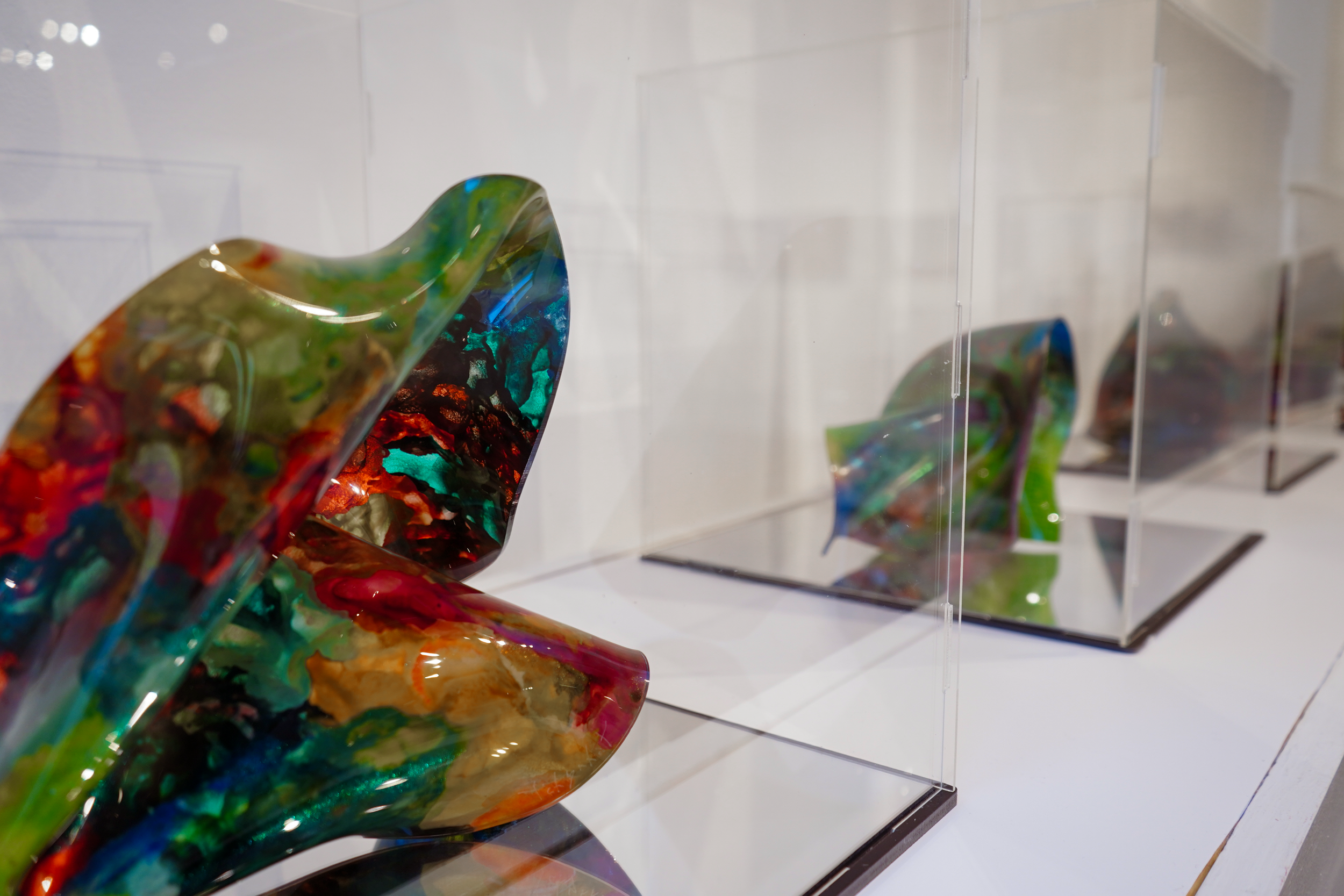
With this lacquer, Tran painstakingly paints onto plexiglass to create beautifully patterned abstract paintings. For some pieces, she uses heat to bend and shape plexiglass into three-dimensional forms, thereby bringing these paintings into the realm of sculpture. This technique is not widely used and has even led to new branches of study at universities in Japan, where Tran's work and techniques are studied. Her work on these techniques earned her the Indianapolis Creative Risk Fund grant, as she was the first artist to use urushi lacquer to create three-dimensional sculptures. When looking at these sculptures, it is hard to believe that they were once a flat piece of plexiglass, molded by hand and fire into a new shape.
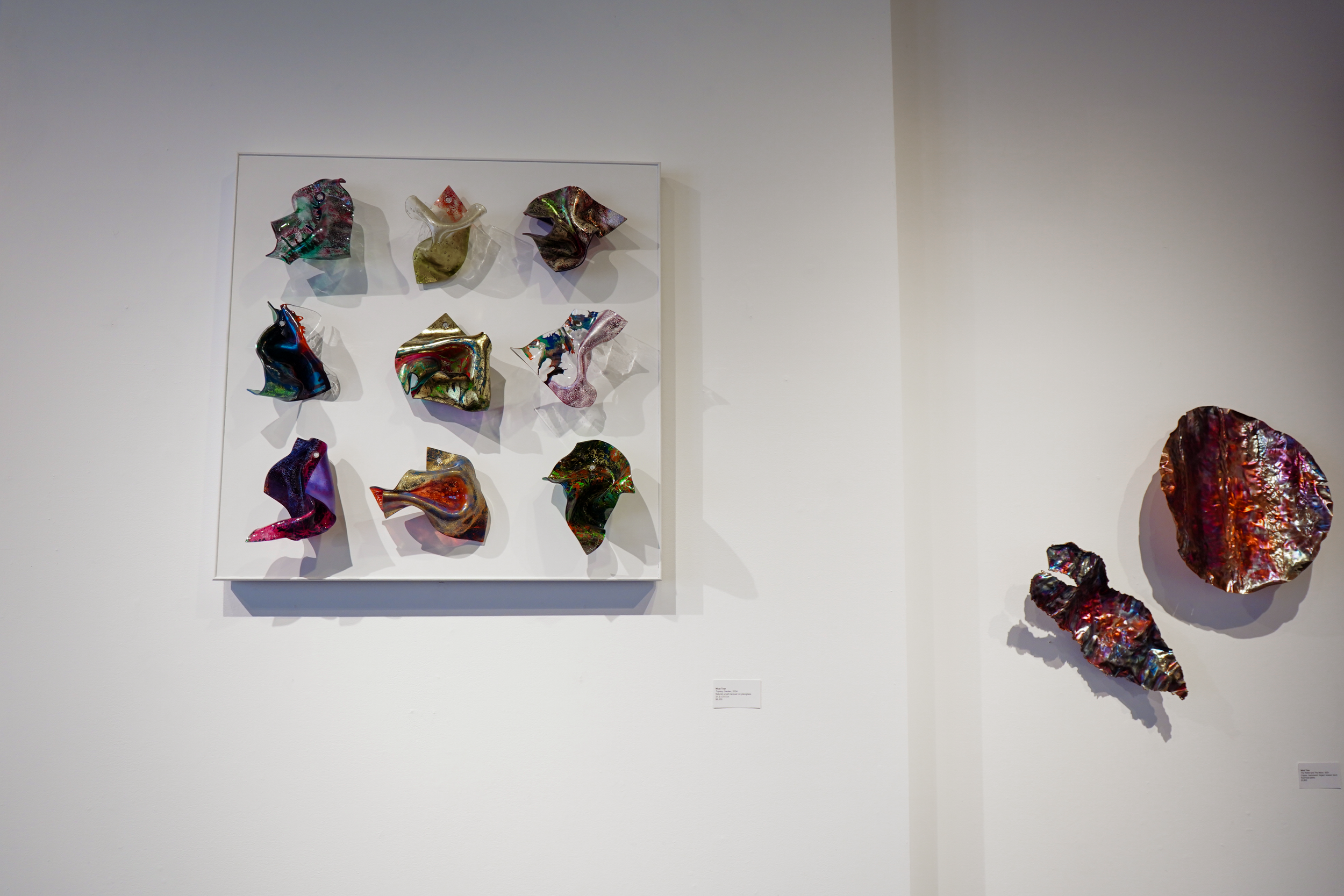
Some of the pieces in this collection are made of different, sometimes surprising, materials. A perfect example is Tran's piece, A Tale Of Grace And Wildness, in which the urushi lacquer is applied directly to deer antlers. It adds an otherworldly, slightly apocalyptic feel to the show and highlights the sharp lines and shapes created by the antlers. The antlers also emphasize the range of Tran's artistic abilities, as painting on a canvas and on other flat surfaces looks very different from painting on curved surfaces like antlers.
Even Tran's acrylic paintings have a glass-like quality, despite being painted on canvas. They are smooth, full of color and pattern, and it is clear from looking at them that she has taken time to develop these techniques as well. They are intricate and liquidlike, and it is easy to get lost in them if you look at them too long. Despite the fact that it is a very different material from the urushi lacquer pieces, these acrylic paintings complement them perfectly.
Overall, this is a beautiful show full of vibrant colors and interesting shapes. It is evident in any of Tran's incredibly intricate pieces that she cares deeply about the process of discovery as an art practice, and we can each take inspiration from her creativity and love of learning new techniques.