Remnants and Fractures
In Quincy Owens' newest exhibition, he presents two distinct bodies of work that connect in their exploration of fractures as a means of expressing beauty. Owens considers himself someone who uses both the left and right hemispheres of the brain. This can be observed in his approach to making work. The left side of the brain is considered to be responsible for logical and analytical thinking, while the right handles creativity and intuition.
"These bodies of work will show both pathways and blockages, much like the human brain can typically process, or not," says Owens. "I've been exploring how the right and left hemispheres of my brain work together but separately, simultaneously, and these artworks will show the vast difference in how I process what I consider to be art depending on my cognitive processing at the moment."
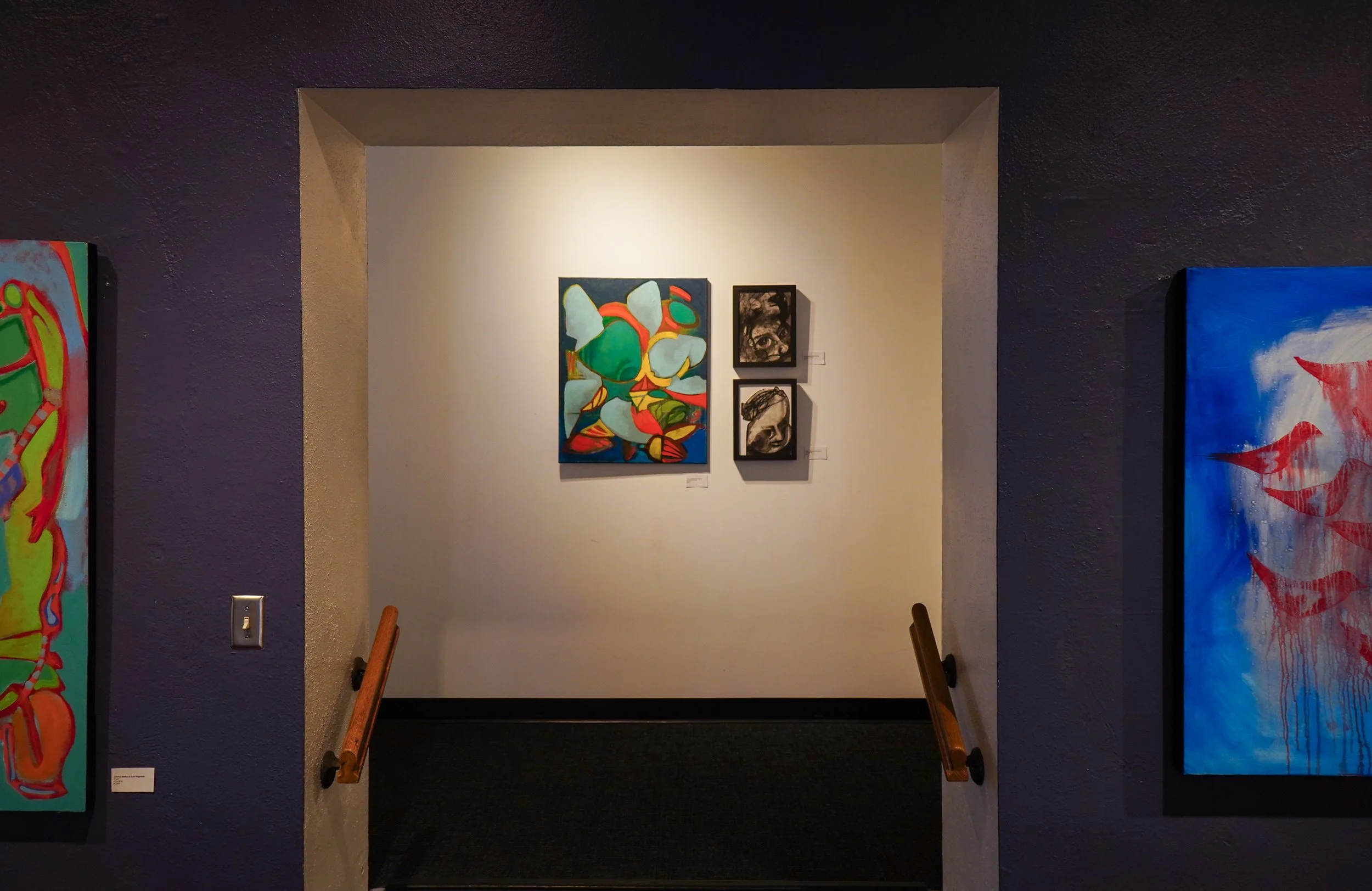
The styles of work Owens presents in Remnants and Fractures are both contradictory and complementary. One style of work is made by machinery and the other by hand, but both result in an organic feeling.
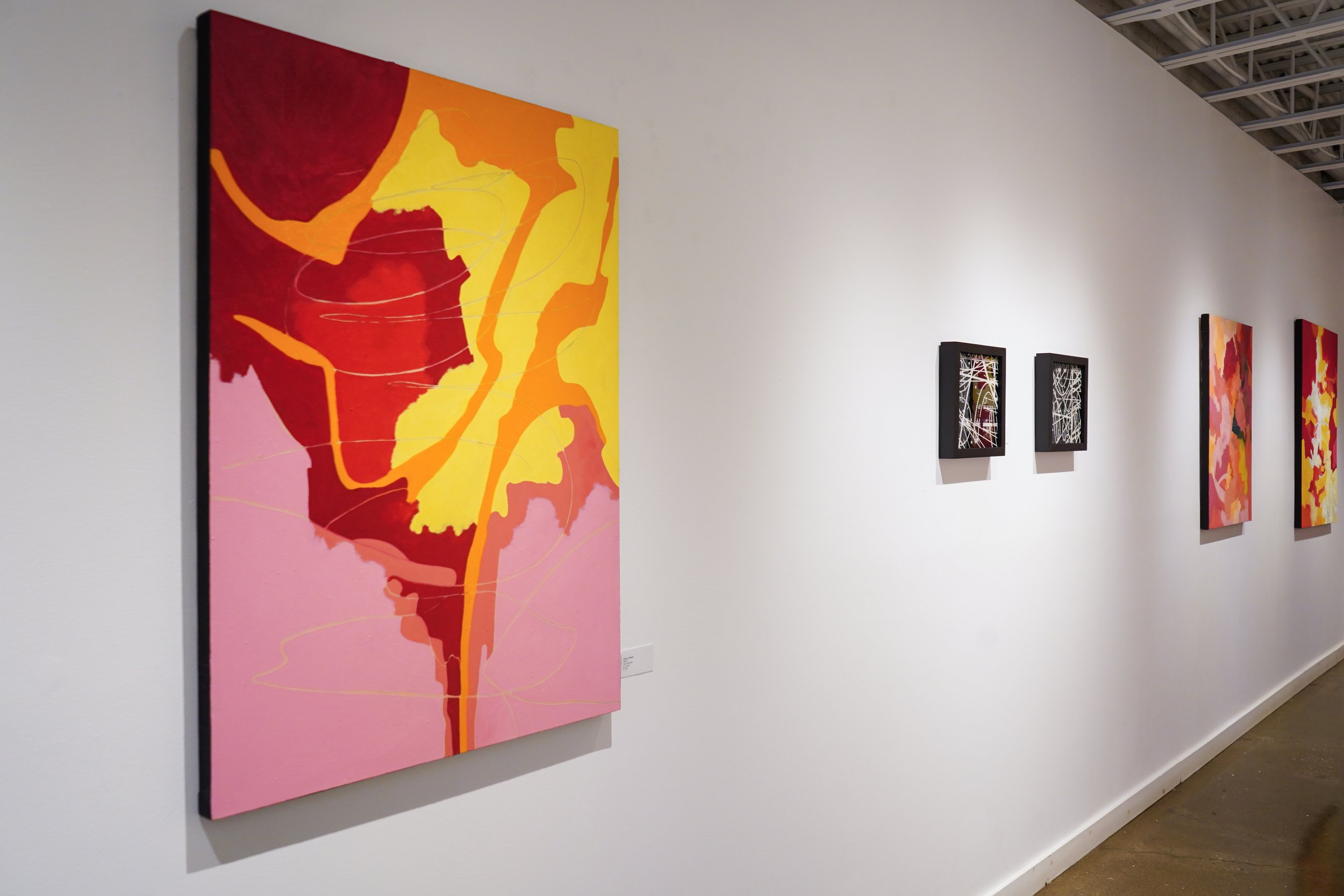
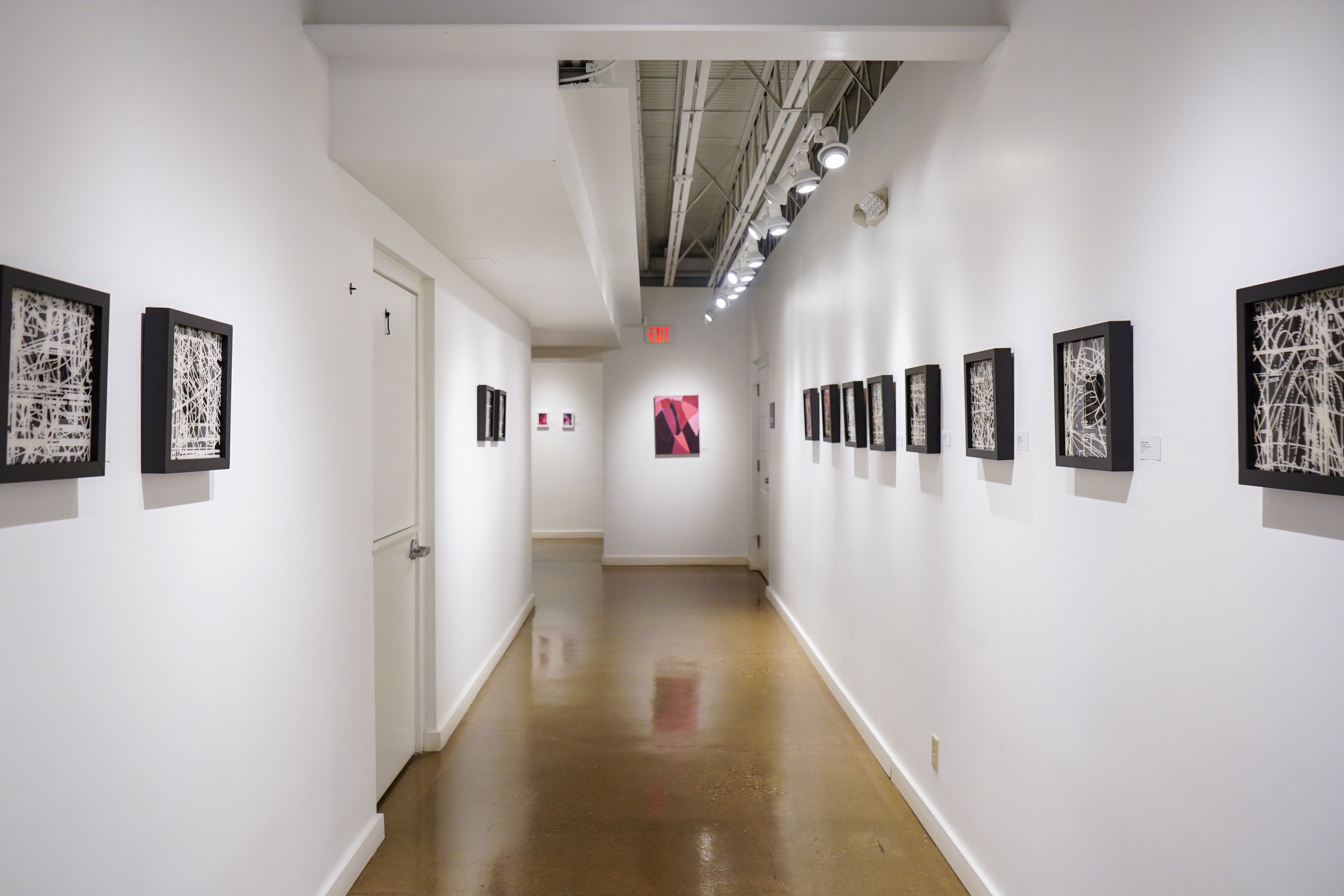
One of the styles of work Owens is exhibiting is several panels cut by a CNC router, rendered in stark black and white. The other style of work is a series of brightly colored paintings made slowly with small brushes. This is a method for Owens to create in a meditative way, allowing him to both slow down his process of making and process his internal experiences.
Some of the works are literally "remnants" turned into art, while the paintings explore how there can be beauty in fractures and faults, even in their celebration. One painting stands out in particular among the works in Remnants and Fractures. Owens displays an abstract self-portrait that he has been working on for years. Its layered surface reflects the ever-evolving nature of both Owens' work and sense of self.